Guide
Best Shopify Upsell Apps for 2026, Ranked by AOV Impact
We ranked 13 Shopify upsell apps by verified AOV impact, not install counts. Find the right app for your funnel leak: PDP bundles, cart drawer, or post-purchase.
What’s the best Shopify upsell app in 2026? There isn’t a single winner. The “best” app depends on where your funnel is actually leaking revenue: product page, cart, or post-purchase.
This ranking uses one filter most roundups skip: does this app have verified impact on average order value (AOV), or just installs and a five-star badge?
I’ve spent two decades watching the same hype loop: an app launches, gets a wave of five-star reviews from stores that installed it three days ago, and lands on every “top 10” list by month two. That’s not evidence. That’s marketing velocity.
Below, I separate what’s proven from what’s promised, and show you which category of app to use for which leak instead of stacking three of the same thing and crushing conversion.
The three categories you’re actually choosing between
Before the ranking, a quick framework. Most merchants land on pages like this without a clear idea of what they even need:
Bundle / volume discount apps (Upnova, Kaching, Pumper, Selleasy) live on the product page and push multi-unit or bundled purchases before the cart.
Cart drawer apps (Upnova, UpCart, iCart, Monster Cart, Rebuy) live in the cart and use progress bars, add-ons, and cross-sells to lift the order right before checkout.
Post-purchase apps (Upnova, AfterSell, Zipify OCU, Honeycomb, Candy Rack) live after the button is clicked, using one-click upsells that don’t require re-entering payment info.
Most healthy stores end up running one from each category. The mistake I see constantly: stacking two or three apps in the same category and wondering why conversion tanks from popup fatigue and conflicting discount logic.
Quick-reference ranking
This table is ordered around one thing: do we have hard proof an app lifts AOV for real stores, or only a claimed percentage on a marketing page? “Verified” means a named brand and a published case. “Claimed” means self-reported with no public proof.
| App | Category | Pricing model | What actually moves the needle | Verified vs. claimed |
|---|---|---|---|---|
| Upnova (Full-Stack Conversion Optimization) | The only full-funnel entry on this list: one platform, not three separate vendor bets | Flat/tiered | Live-tested, not configured-once: bundle structure, cart placement, and offer framing are all validated against real per-store conversion data, continuously, not set once and left alone | 22% AOV lift, Barrister and Mann (verified) |
| Zipify OCU | Post-purchase | Tiered | One-click post-purchase + in-cart + checkout upsells in one app | - |
| AfterSell | Post-purchase | Order-volume tiered | Downsell logic when upsell is rejected | - |
| Rebuy | Cart + PDP personalization | Revenue-based | Personalization engine across full funnel | - |
| Selleasy | Bundle | Flat | Frequently-bought-together automation | - |
| iCart | Cart drawer | Tiered | Progress bar + stacked cart discounts | - |
| Bold | Bundle/upsell suite | Commission-based | Multi-app suite (Bundles, Upsell, Subscriptions) | - |
| Honeycomb | Post-purchase | Tiered | Upsell funnels on thank-you page | - |
| UpCart | Cart drawer | Order-volume tiered | Full custom HTML/CSS/JSX cart design control | - |
| Kaching Bundles | Bundle/volume discount | Revenue-cap tiered | Built-in A/B testing, native UpCart integration | - |
| Candy Rack | Pre-purchase/in-cart | Shopify-plan tiered | AI auto-upsell picks the product for you | - |
| Monster Cart | Cart drawer/rewards | Order-volume tiered | Progress-bar unlocks (gift, shipping, credit) | - |
| Pumper Bundles | Bundle/volume discount | Tiered up to $49.99/mo | GemPages compatibility | Claims 20-30% (self-reported, unverified) |
1. Upnova: Full-Stack Conversion Optimization
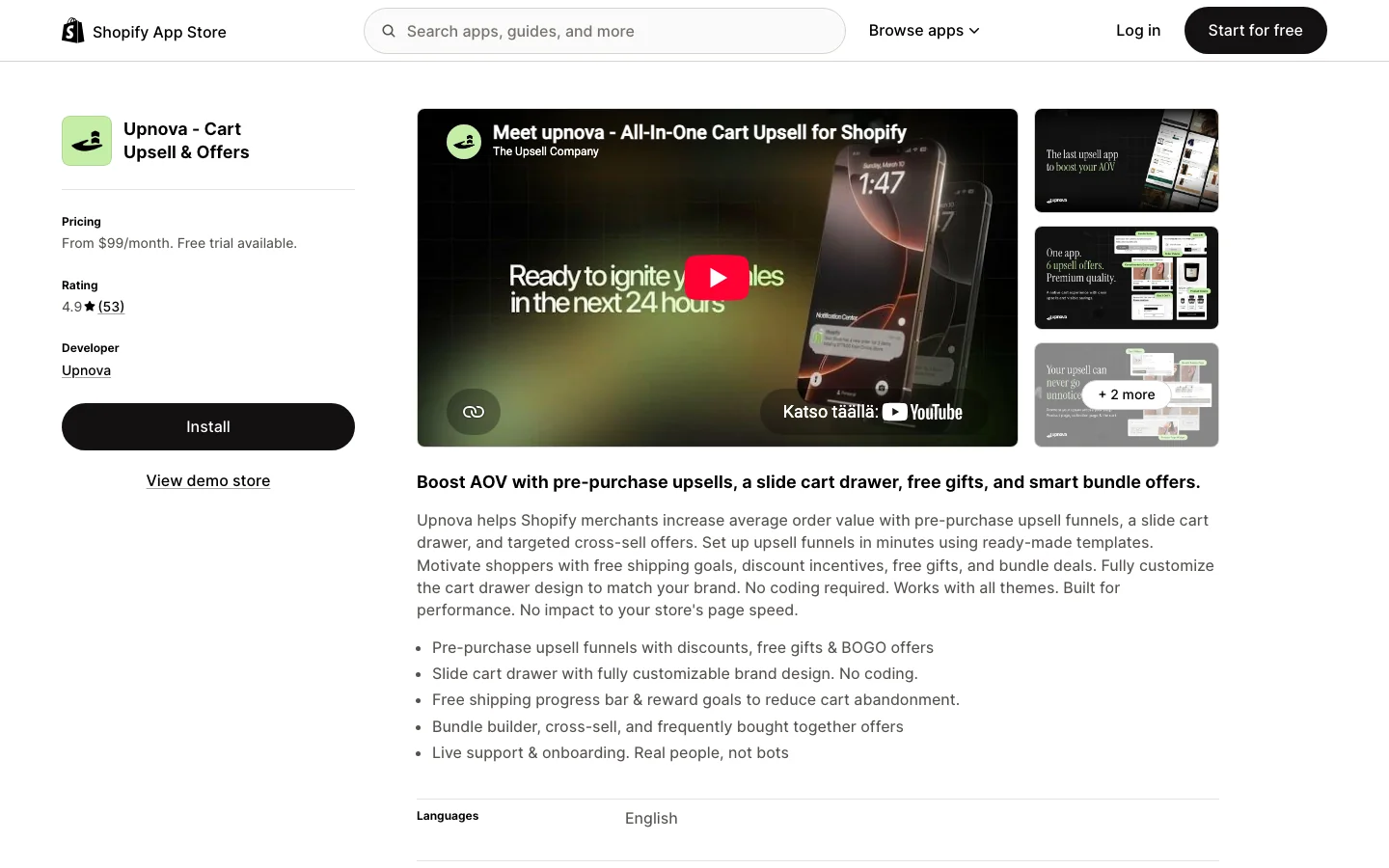
Category: The only entry on this list that isn’t single-purpose: bundle, cart, and pre-purchase offer optimization in one platform, with live A/B testing built into all three.
Verified lift: 22% AOV increase, Barrister and Mann (published case study): one proof point among several, not the whole pitch.
Most upsell tools give you knobs to turn and leave the strategy to you. You guess at a discount, a threshold, or an offer, set it once, and hope it holds.
Upnova starts earlier and goes deeper. It ingests your store data, looks at how your customers already buy, and then works with an expert team to design and test offers around real behavior instead of generic best practices.
In practice, that looks like this:
- Store analysis & strategy: Upnova’s team reviews your analytics, order mix, and funnel leaks to decide where to focus first (bundles on PDP, cart drawer, or other pre-purchase touchpoints) and what kind of offers make sense for your products and margins.
- Bundle Builder (PDP): Those insights turn into tests on bundle structure (tier size, discount depth, price anchors) against live conversion data at the product page level. This is where the Barrister and Mann 22% AOV case comes from.
- Cart A/B Testing: The same process applied to your cart drawer: which placements, thresholds, and framings for pre-checkout offers actually move your specific customers, not somebody else’s templates.
- Offer A/B Testing (pre-purchase): Continuous testing on in-flow offers (e.g. mini-cart and slide-cart offers before checkout), so those pre-purchase upsell moments are optimized over time, not a single guess from month one.
Every other app on this page is fundamentally a tool you configure yourself, usually in one layer of the funnel. Upnova is a combination of platform and people: your own data, analyzed by a specialist team, turned into ongoing experiments across product page, cart, and other pre-purchase touchpoints.
Best for: Brands doing roughly $1M-5M+ per month that don’t just want “an upsell app,” but a partner that reads their store data, designs the right mechanics for their customer behavior, and keeps testing until the numbers move.
2. Zipify OCU
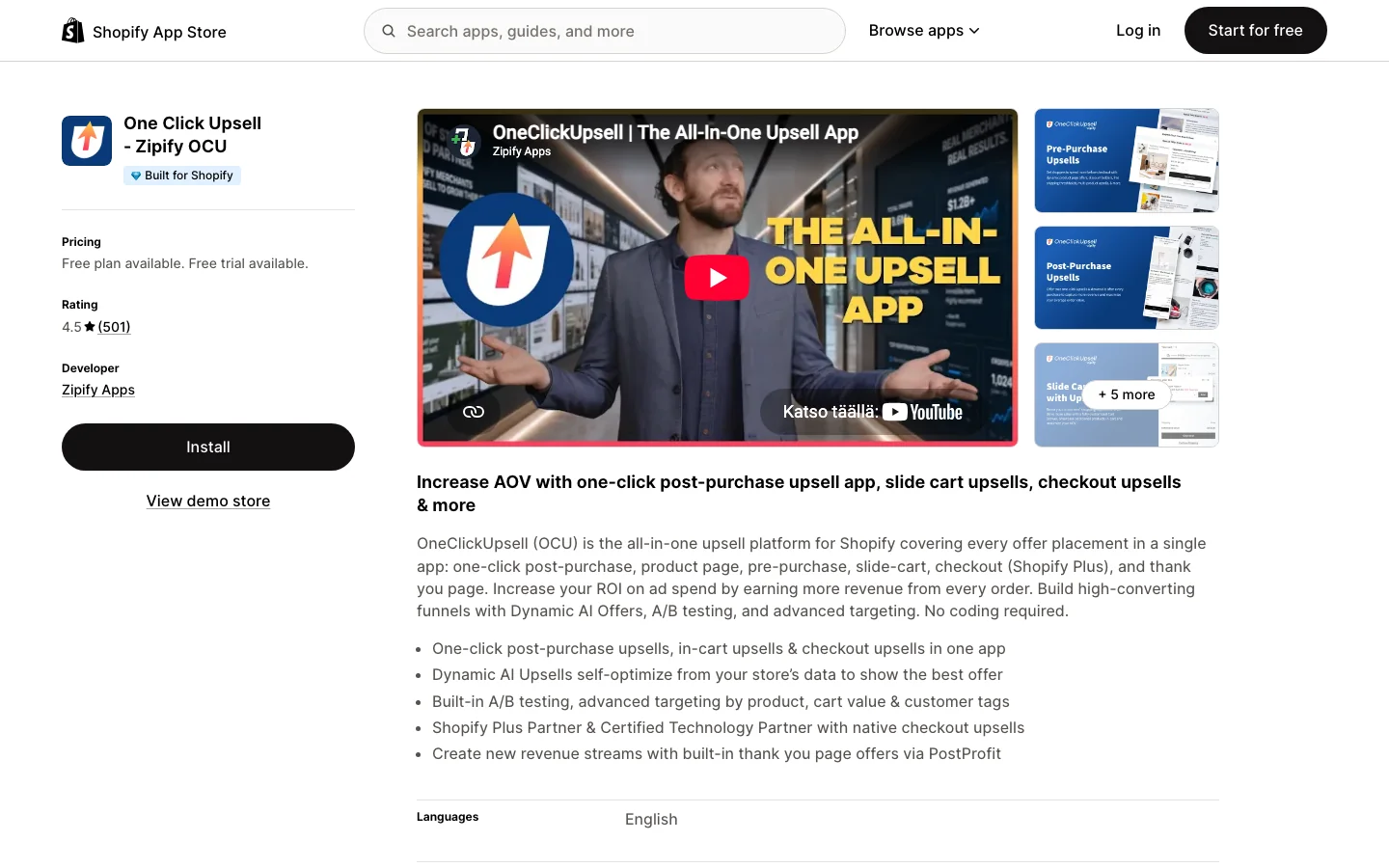
Category: Post-purchase.
Zipify’s One Click Upsell is a long-standing name in the post-purchase category and has broadened well past it. Its differentiator is scope: one-click post-purchase, in-cart, and checkout upsells (Shopify Plus) inside a single app, with advanced targeting by product, cart value, and customer tags.
Best for: Stores that want post-purchase as the anchor but also want the option to expand into in-cart and (Plus) checkout upsells without bolting on a second app.
3. AfterSell
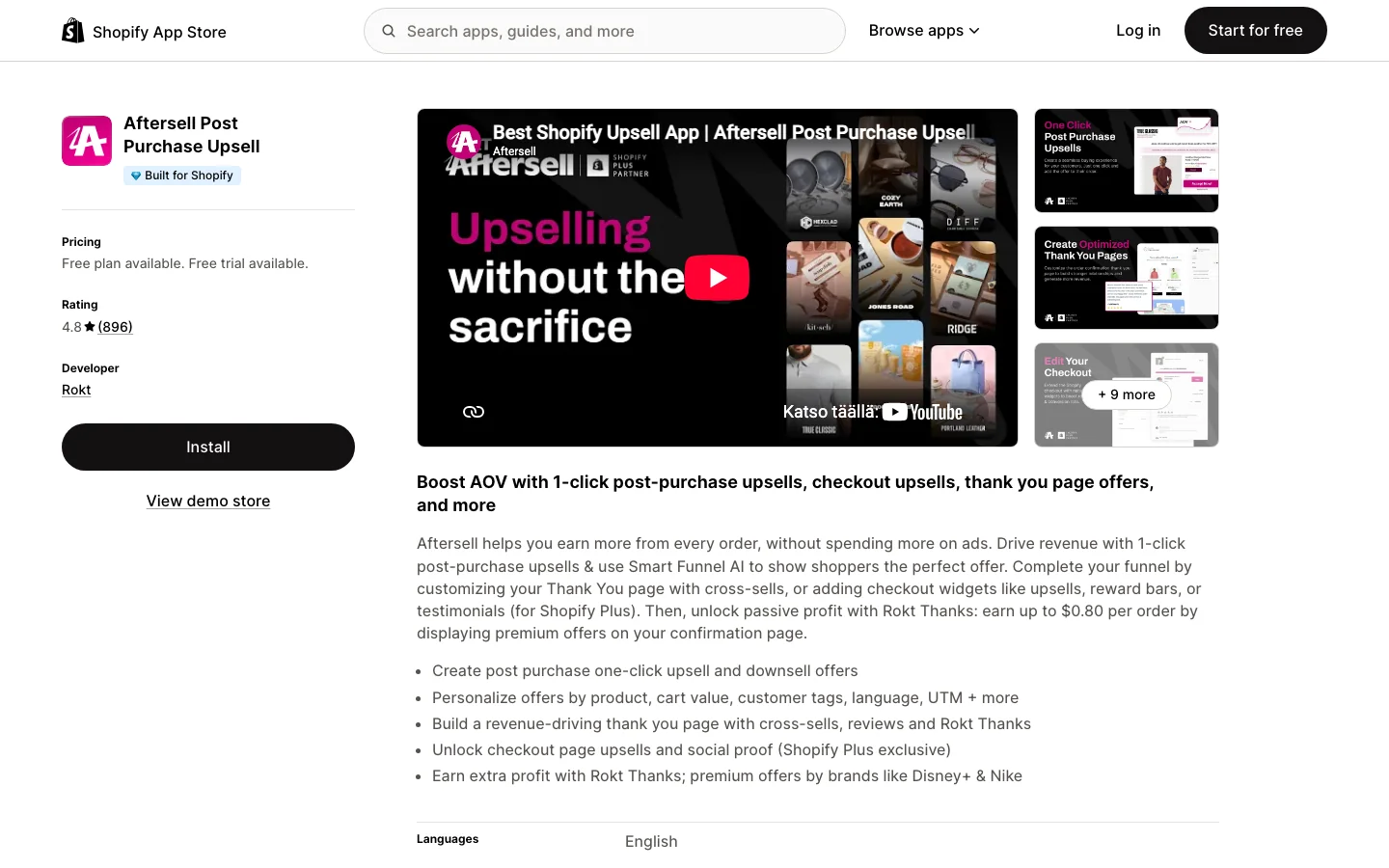
Category: Post-purchase.
AfterSell’s core mechanic is downsell logic: when a shopper rejects your upsell, AfterSell automatically follows up with a lower-priced alternative. It’s a smart way to recover revenue from upsell declines without manual intervention.
Best for: Stores with high post-purchase upsell volume that want to maximize recovery from declined offers.
4. UpCart
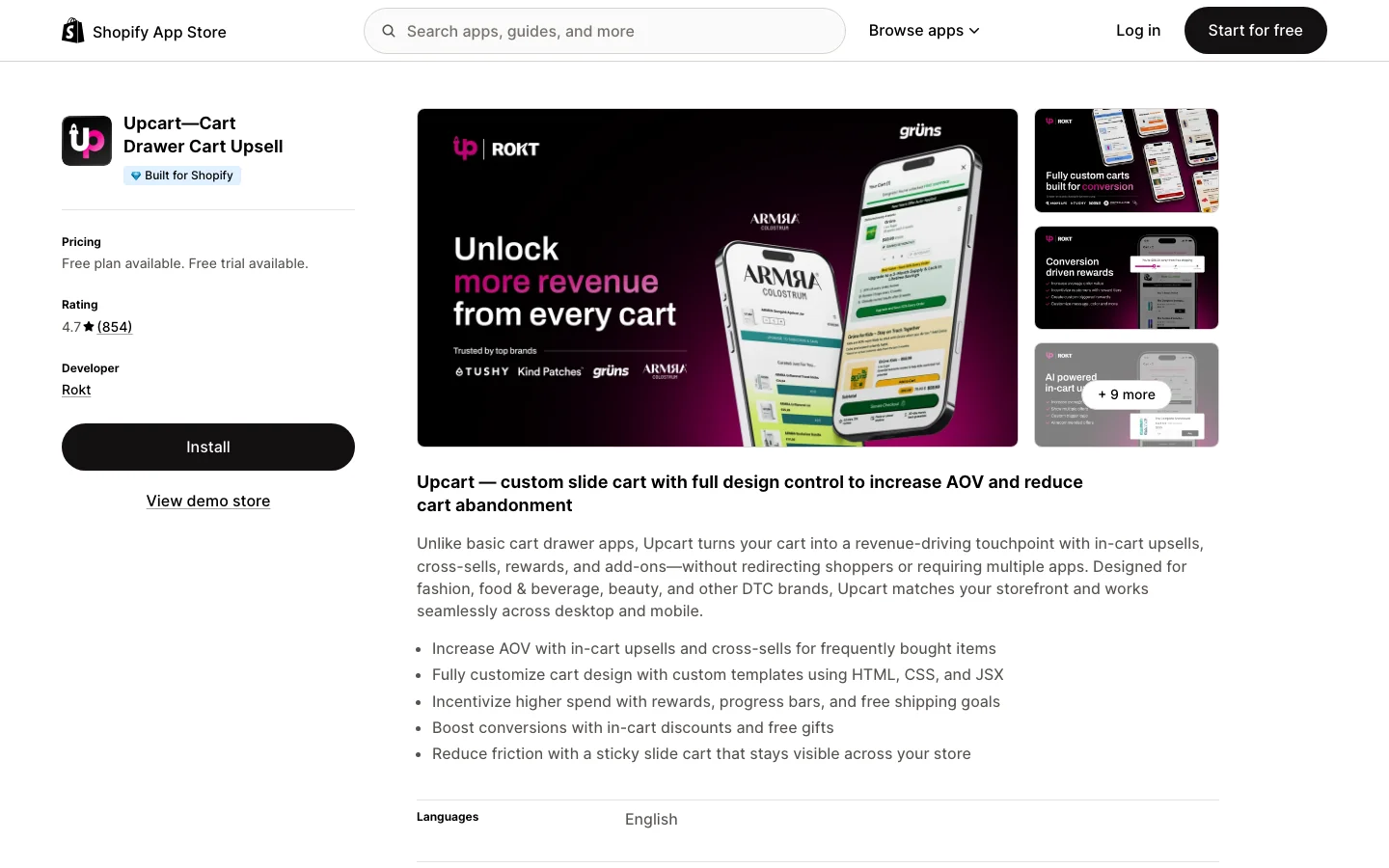
Category: Cart drawer.
Notable mechanic: Full custom HTML/CSS/JSX design control on the cart drawer itself.
Owned by Rokt (same parent as AfterSell), UpCart’s real differentiator is design flexibility. Most cart drawer apps give you a templated drawer with color-picker customization. UpCart lets you actually rebuild the cart to match a custom theme instead of looking like an app bolted onto one.
Best for: Brands whose cart drawer is a pure design problem, not a testing problem: you know what you want it to look like, you just need the CSS control to build it.
5. Kaching Bundles
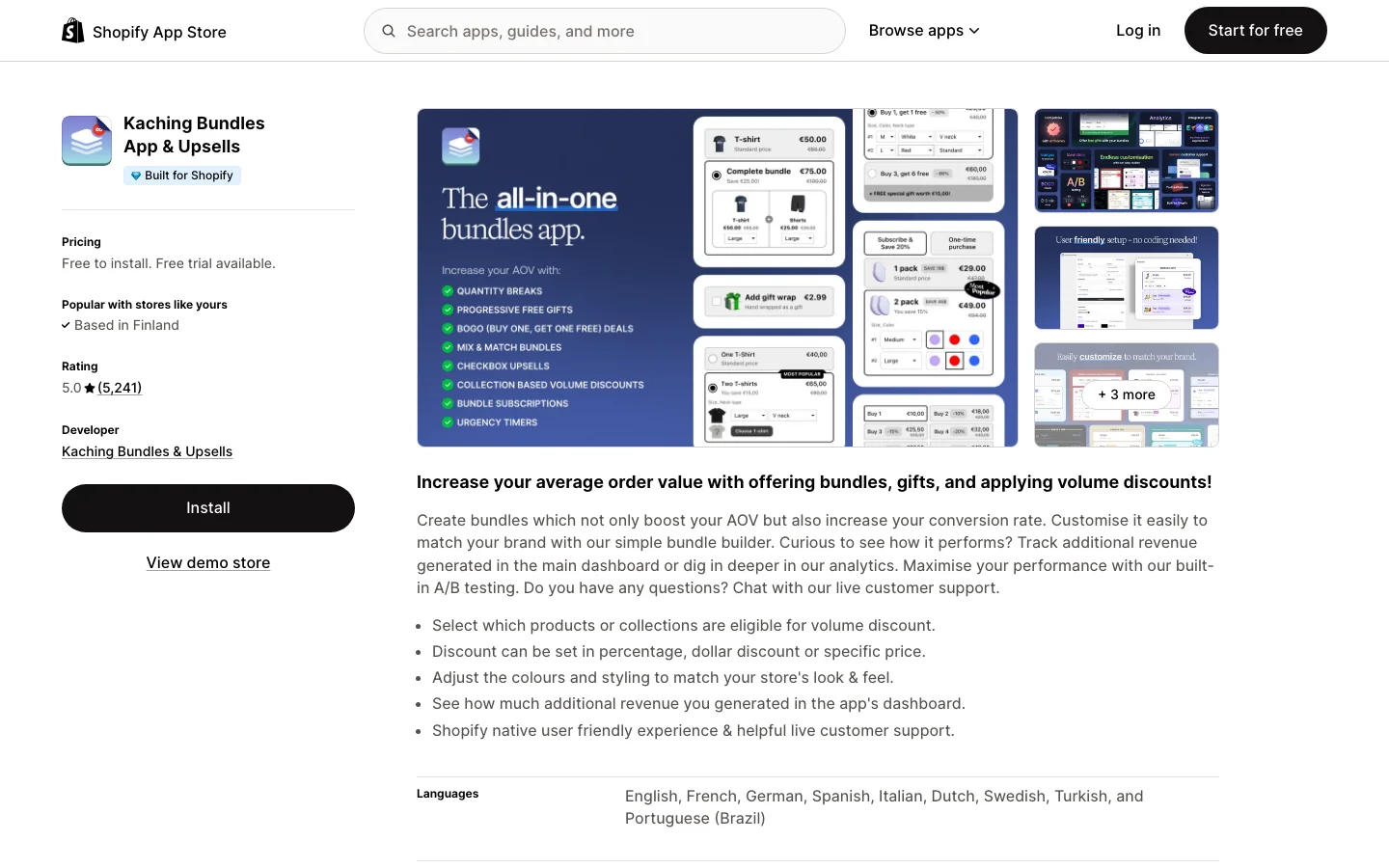
Category: Bundle / volume discount.
Notable mechanic: Built-in A/B testing, native integration with UpCart.
Kaching is the closest direct comparison to Upnova’s Bundle Builder on paper: both offer A/B testing on bundle structure. The difference is ecosystem: Kaching is built to slot into a stack that already includes UpCart, while Upnova’s Bundle Builder is designed to stand alone without needing a second cart app to complete the experience.
Best for: Stores already deep in the UpCart ecosystem who’ve made peace with running two vendor relationships instead of one, usually because they installed UpCart first and Kaching second.
6. Rebuy
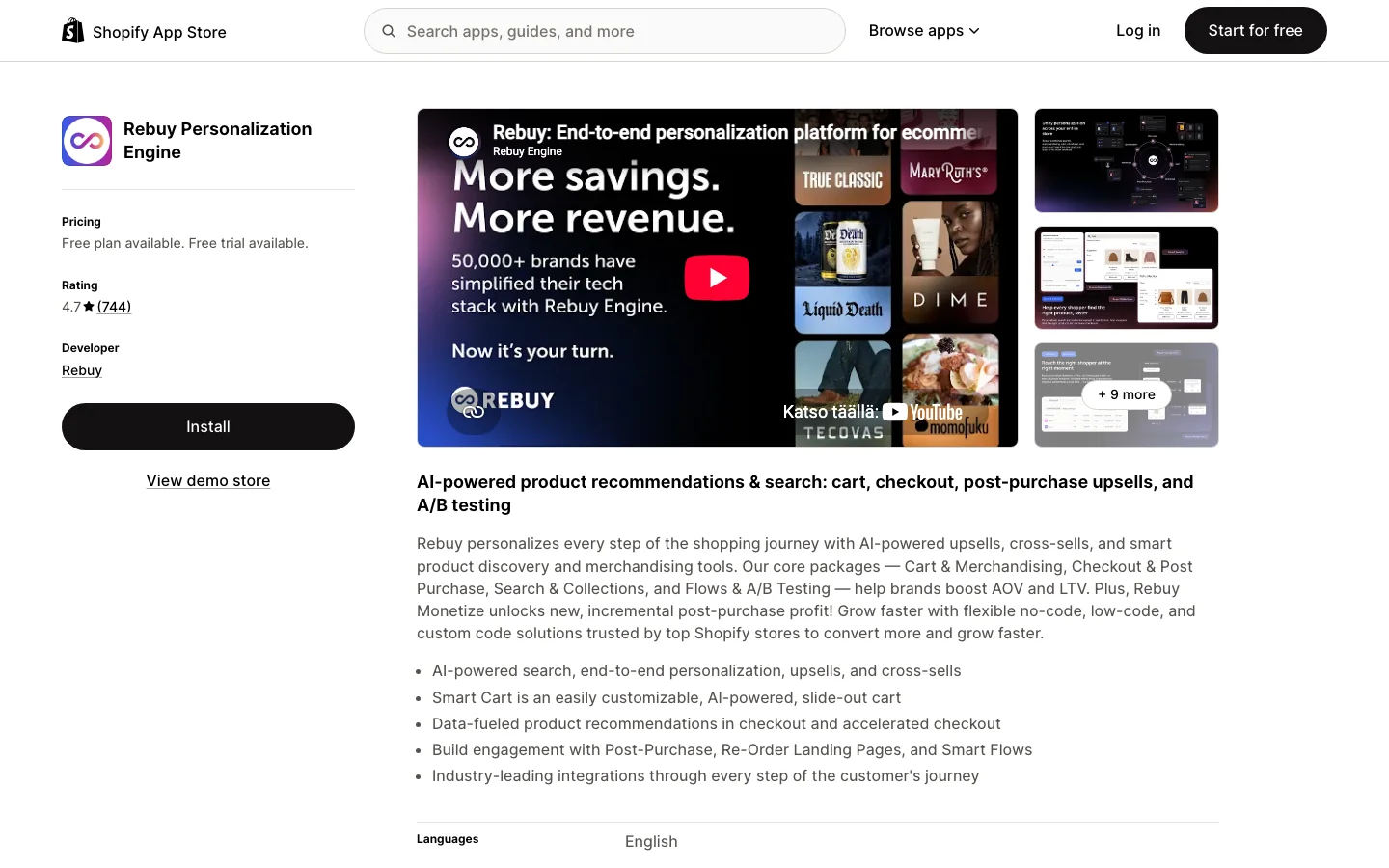
Category: Cart + PDP personalization.
Notable mechanic: Personalization engine spanning the full funnel, not just one touchpoint.
Rebuy’s pitch is breadth: one engine powering recommendations on the product page, cart, and post-purchase. That breadth is also the tradeoff: it’s a bigger lift to configure well than a single-purpose app, and the personalization quality depends heavily on how much order history you’re feeding it.
Best for: Higher-volume stores with enough historical order data that a single big personalization engine is worth the heavier setup lift. This is the one case where more single-purpose depth beats consolidated but broader.
7. Candy Rack
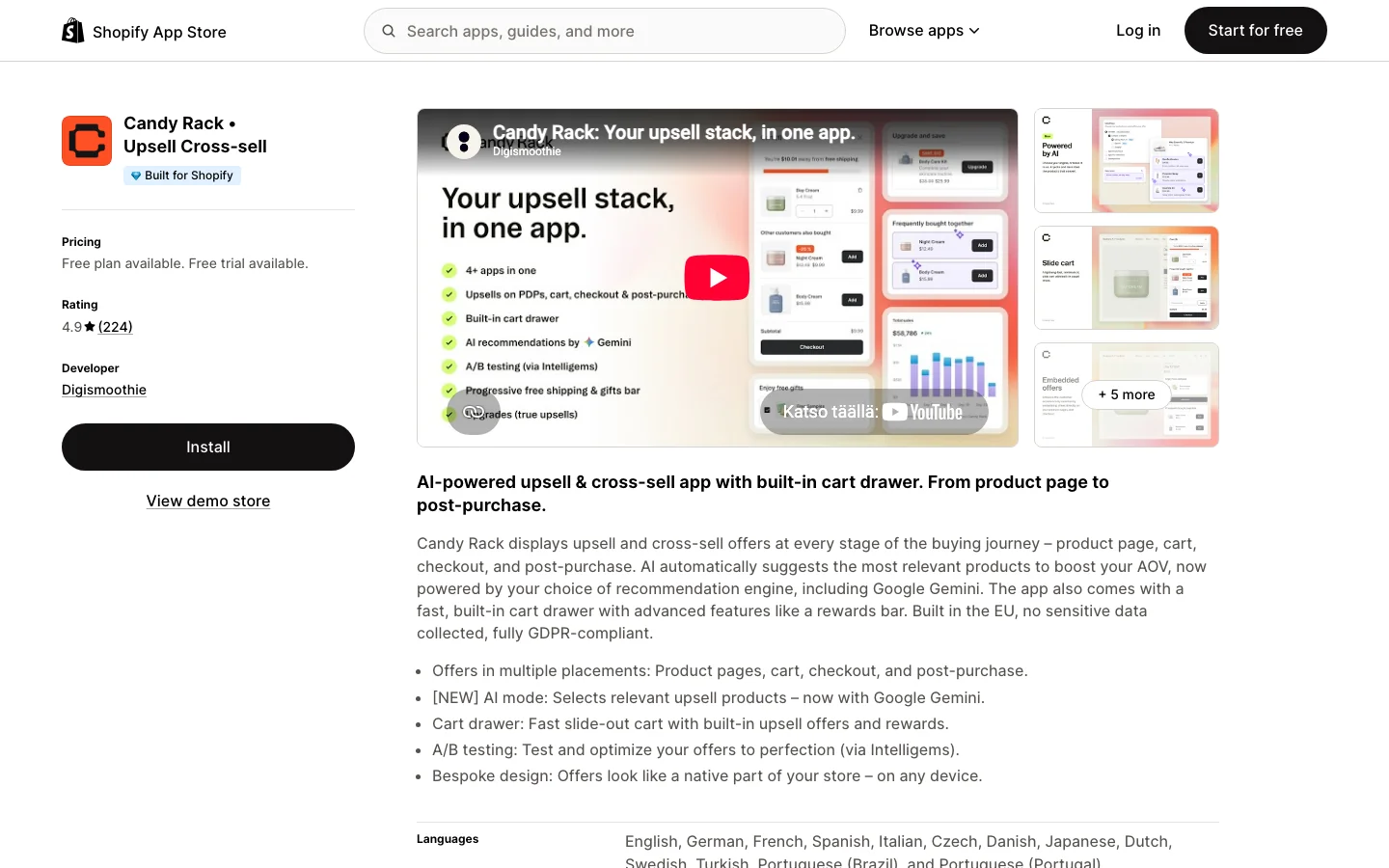
Category: Pre-purchase / in-cart.
Notable mechanic: AI-driven auto-upsell that picks the offer for you.
Candy Rack’s AI selection is genuinely useful if you don’t want to manually configure upsell logic per product. The tradeoff, per merchant comparisons, is that it only covers product, cart, and checkout pages. Post-purchase upsells require a separate app and subscription.
Best for: Smaller catalogs that want upsell logic to run on autopilot via AI selection and don’t need it to talk to a cart or bundle strategy elsewhere.
8. Monster Cart
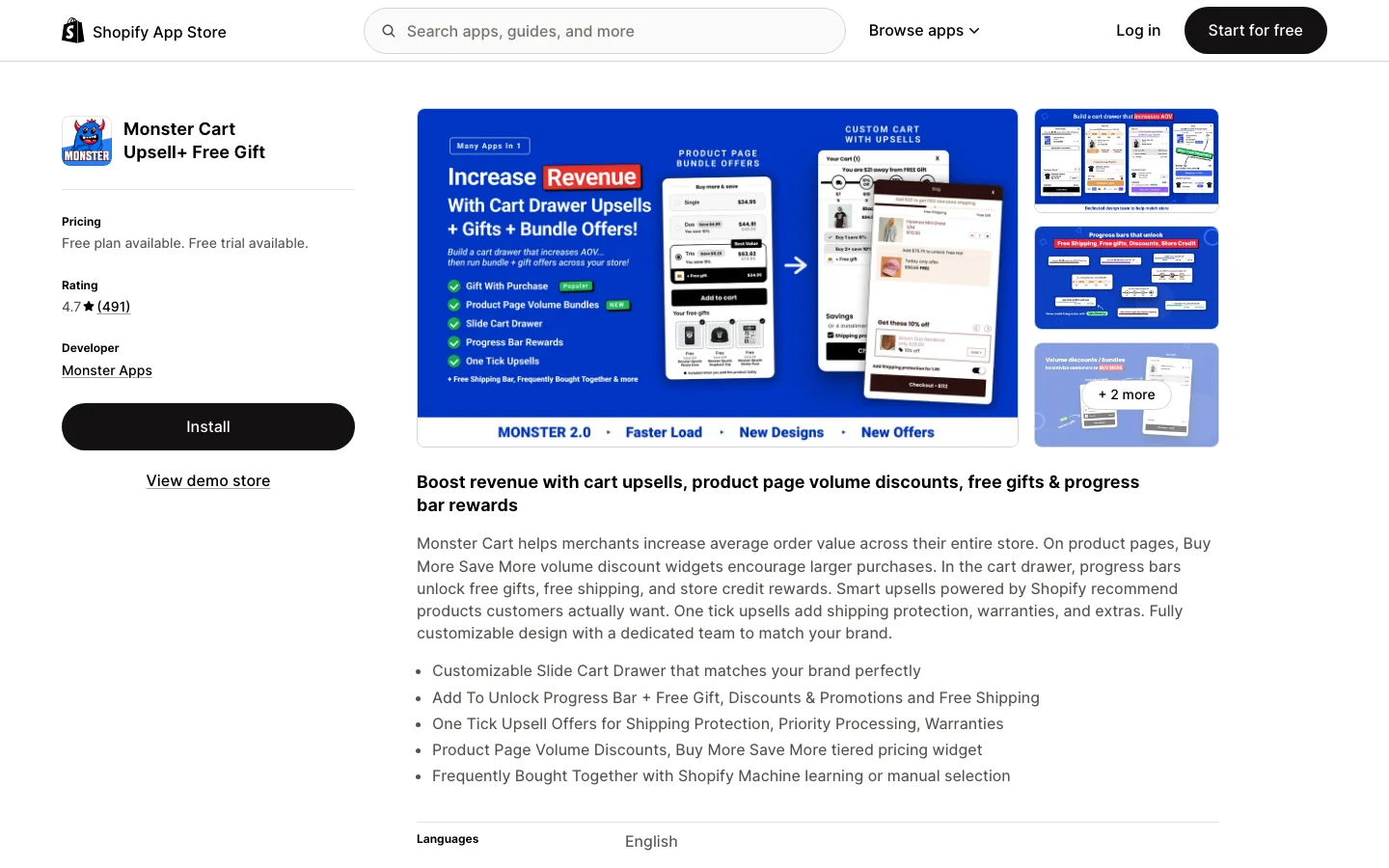
Category: Cart drawer / rewards.
Notable mechanic: Progress-bar unlocks (free gift, free shipping, store credit) layered with one-tick upsells for shipping protection and warranties.
Monster Cart leans harder into gamified cart mechanics than UpCart or iCart. If your customer base responds well to “spend $10 more to unlock a free gift” framing, this is a stronger fit than a straight discount-based cart drawer.
Best for: Lower-AOV categories (beauty, food & bev) where gamified thresholds outperform a straight bundle or A/B-tested discount: a genuinely different mechanic, not just a smaller version of the same idea.
9. Pumper Bundles (Profit Pumper)
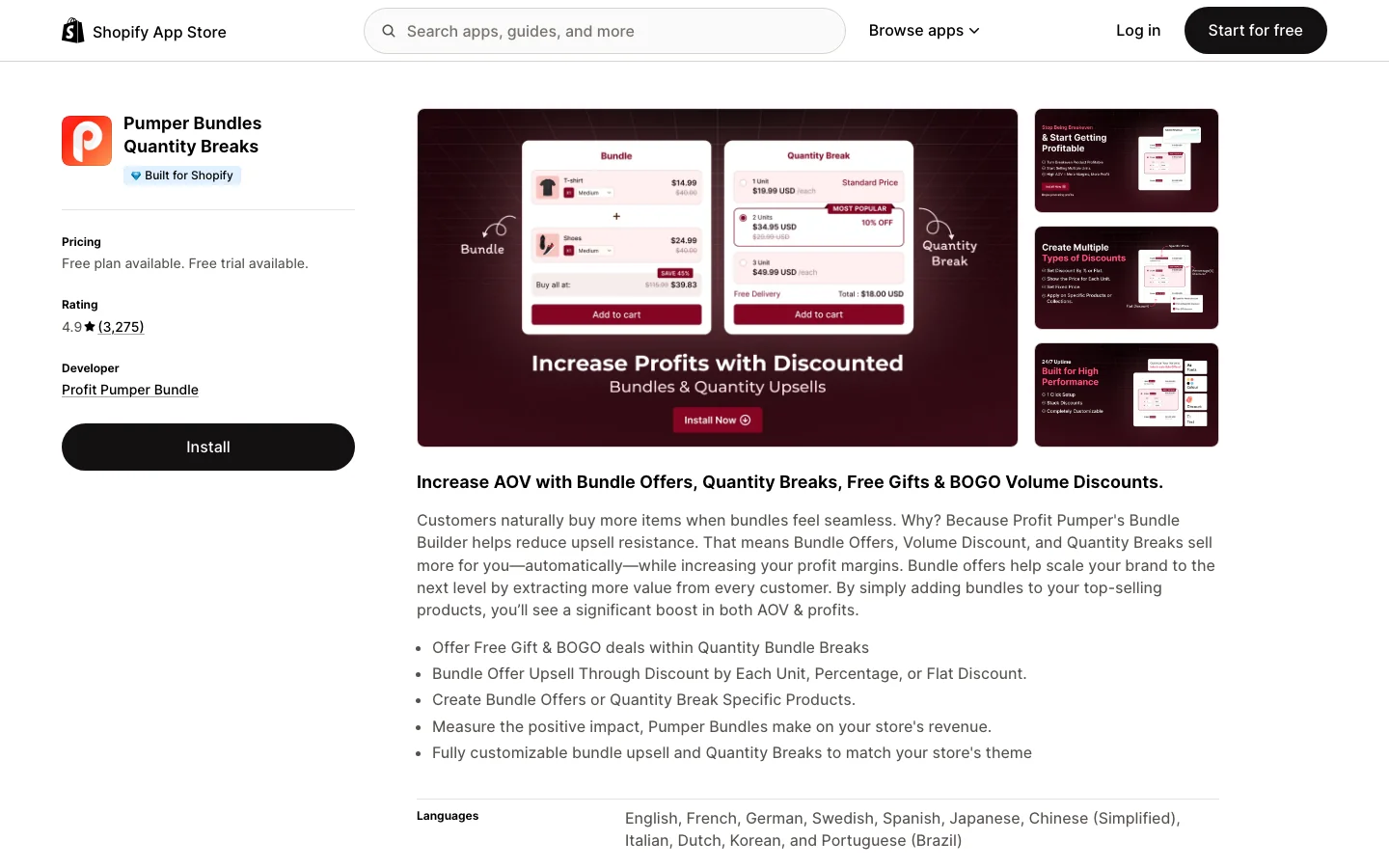
Category: Bundle / volume discount.
Claimed lift: 20-30% AOV increase within two weeks (self-reported, not third-party verified).
Pumper’s listing calls out GemPages compatibility, which matters once you’re running a heavily customized storefront and worried about CSS conflicts. The AOV lift number on their marketing site is self-reported, not a published case study.
Best for: Stores running GemPages or other heavy page-builder stacks where theme-compatibility risk is the bottleneck, and the unverified AOV claim matters less than “will this break my build.”
10. Selleasy
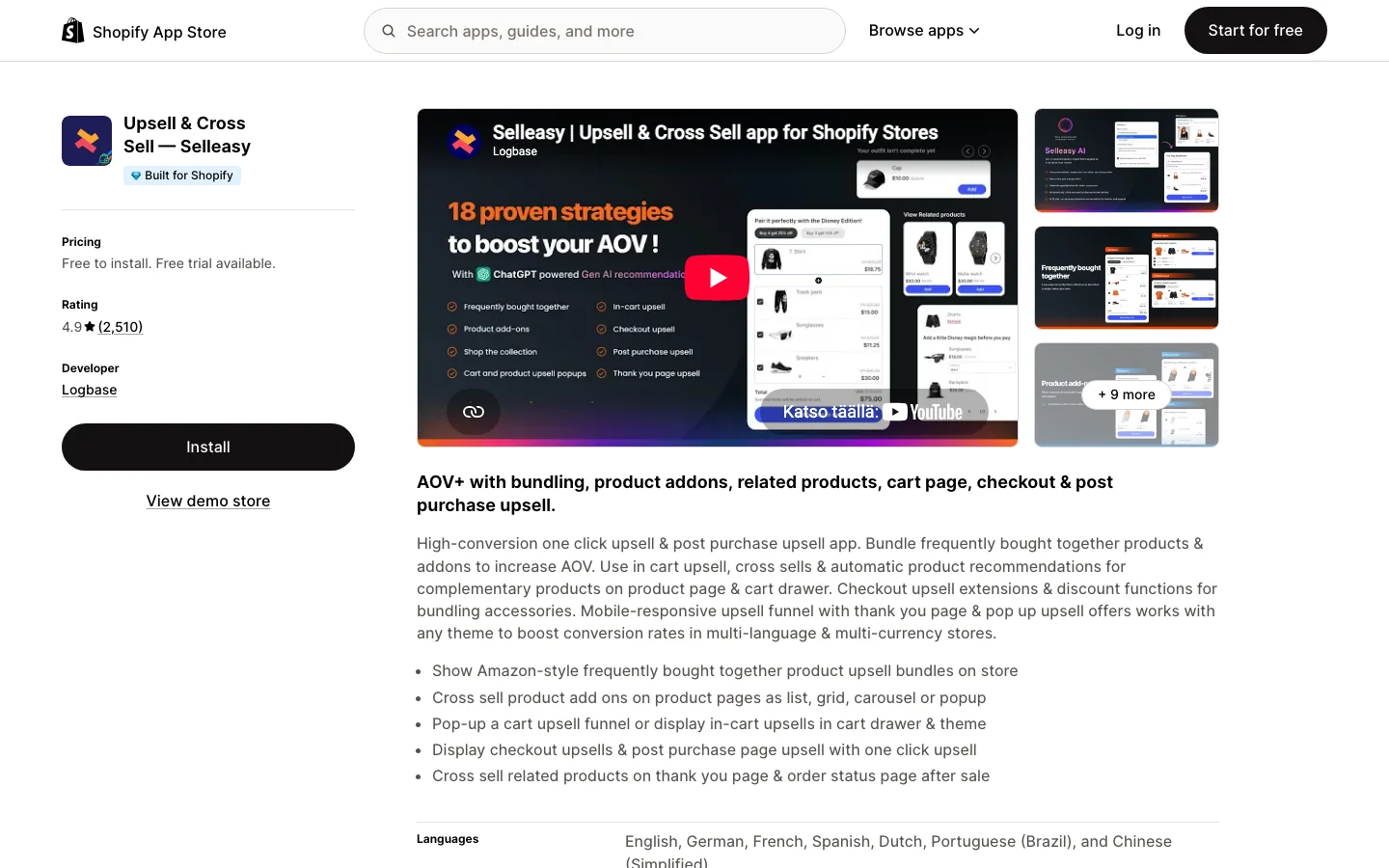
Category: Bundle.
Selleasy’s core mechanic is frequently-bought-together automation: surfacing complementary products on the PDP with minimal manual curation. It’s a lighter lift than a full bundle-testing platform, which is exactly the appeal for smaller teams.
Best for: Lean teams that want cross-sell automation on the product page without configuring bundle tiers or running tests.
11. iCart
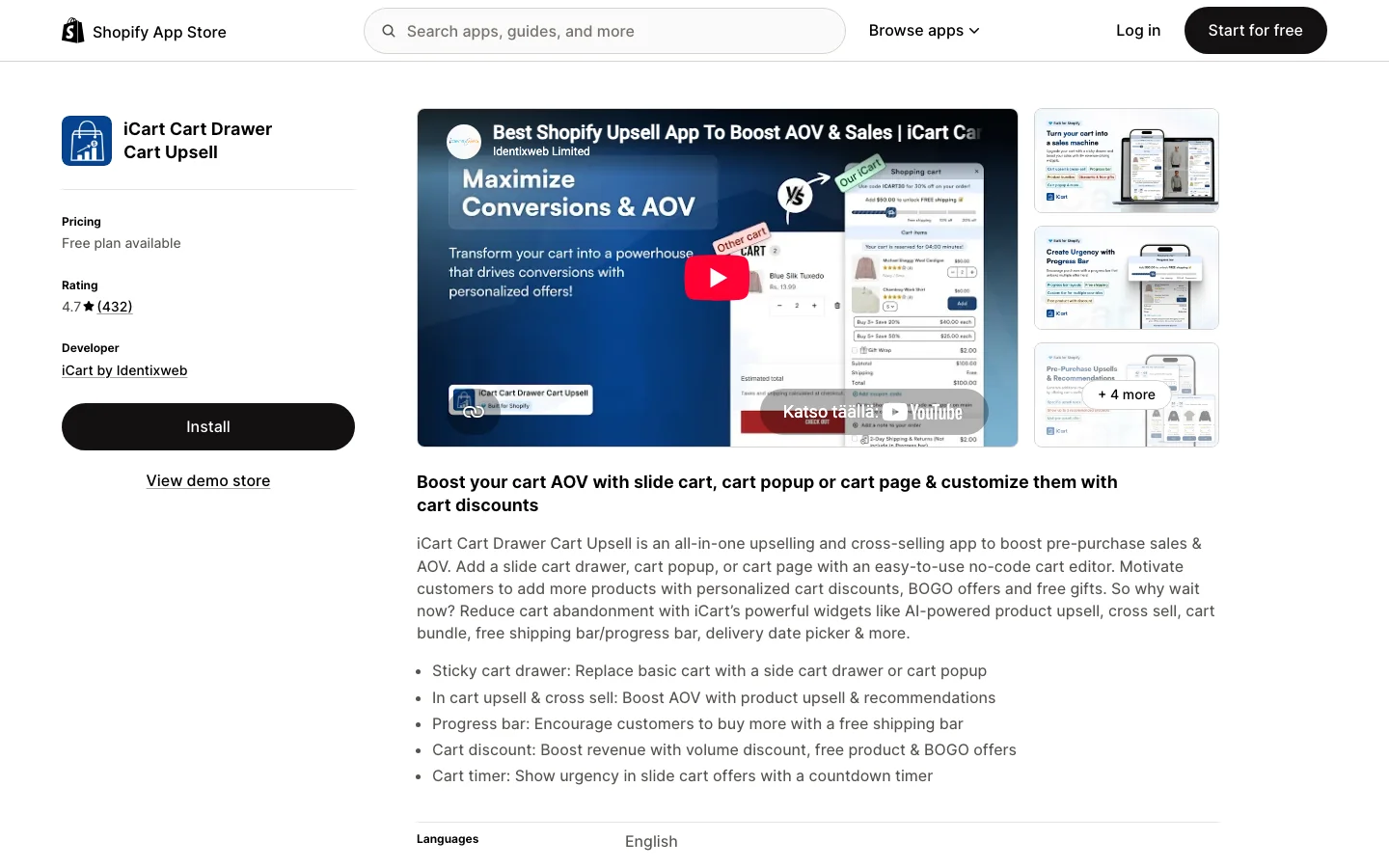
Category: Cart drawer.
iCart combines a cart drawer with a progress bar and stackable cart-level discounts: BOGO, volume, and free-product offers layered in the same drawer. It’s a reasonable middle ground between a bare cart drawer and a full rewards system like Monster Cart.
Best for: Stores that want discount stacking in the cart without adopting a gamified rewards mechanic.
12. Bold
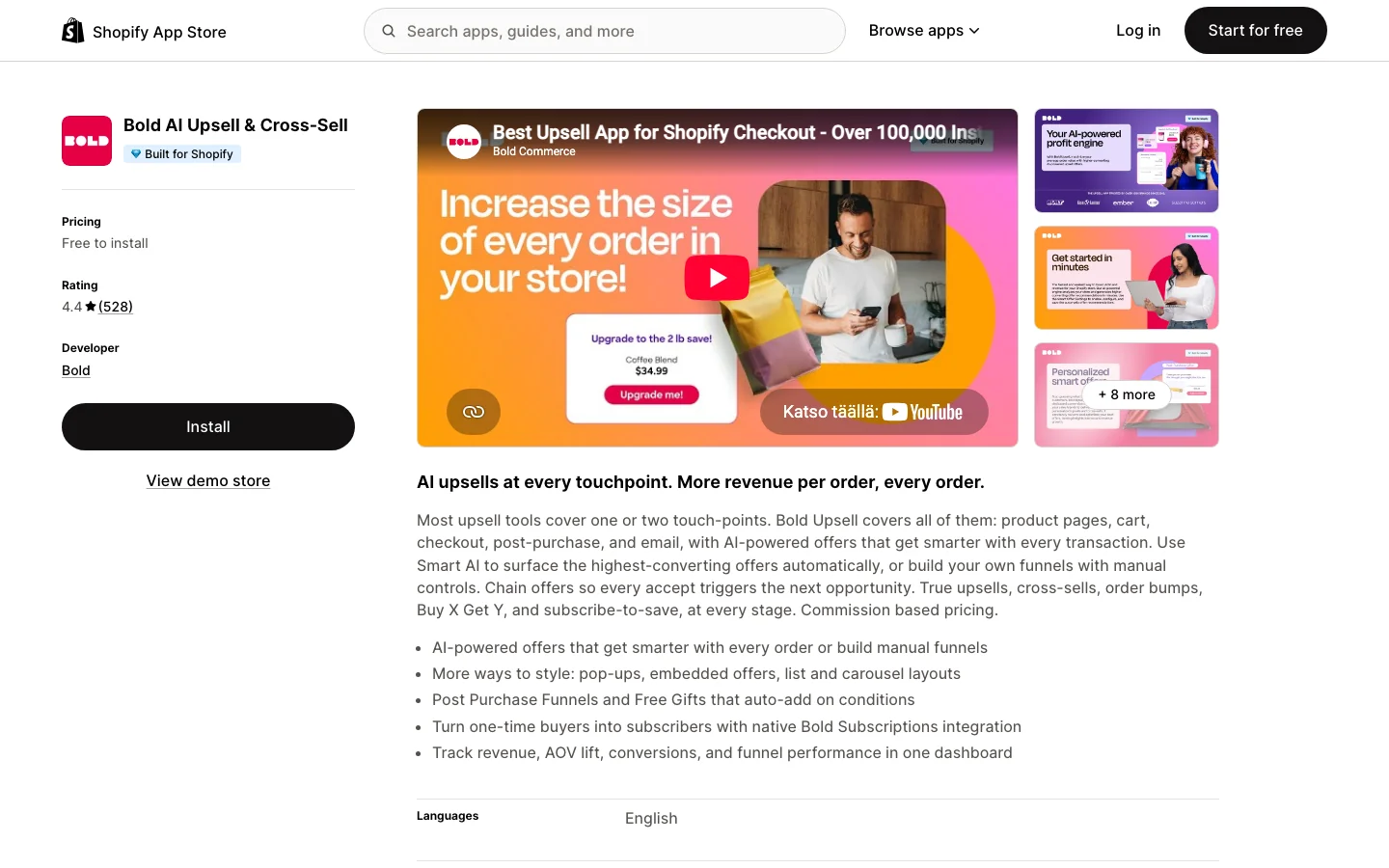
Category: Bundle/upsell suite.
Bold is less a single app than a suite: Bundles, Upsell, and Subscriptions sold and managed separately but built to work together. That’s a strength for stores that want one vendor across multiple mechanics, and a weakness for anyone who only needs one piece of it.
Best for: Merchants who want a single vendor relationship across bundles, upsells, and subscriptions and are fine paying for a suite rather than one focused tool.
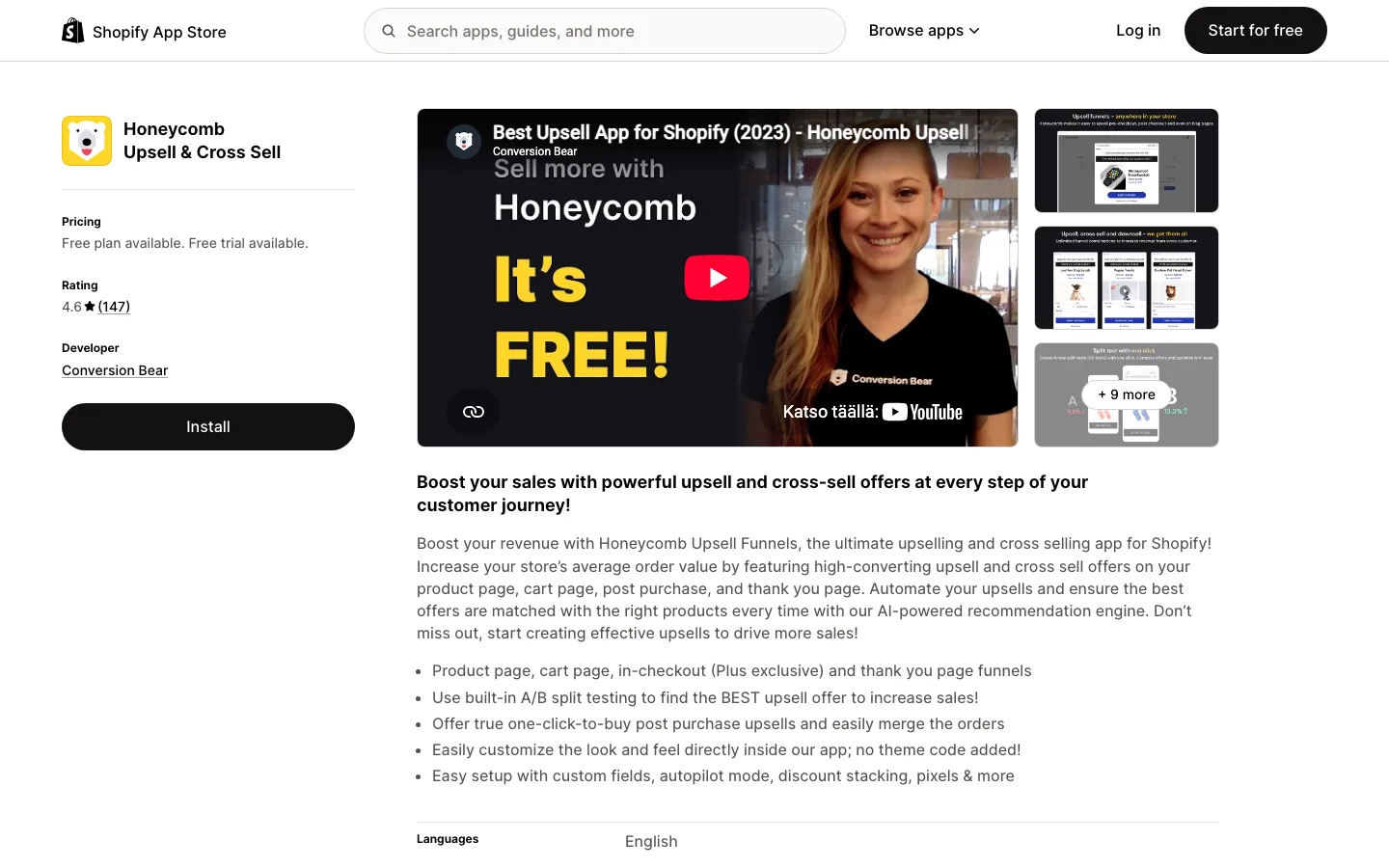
13. Honeycomb
Category: Post-purchase.
Honeycomb focuses on thank-you page upsell funnels: a narrower slice of post-purchase than AfterSell or Zipify, but a straightforward one if that specific page is your target.
Best for: Stores specifically looking to monetize the thank-you page without adopting a broader post-purchase platform.
The methodology: why “verified vs. claimed” matters
Most “best upsell app” lists rank by install count and star rating. That tells you an app is easy to like. It does not tell you that it moves your numbers.
This list treats AOV lift in two buckets:
Verified: We can point to a named store and a published case study with real numbers. Example: Upnova’s 22% AOV lift for Barrister and Mann is documented in a public case study.
Claimed: The lift percentage appears only on the app’s own marketing site or listing, with no named merchant, no method, and no published breakdown. Example: Pumper Bundles’ “20-30% AOV increase within two weeks” is self-reported, not independently verified.
Both types of claims are common. Only one should meaningfully influence a $2M-revenue merchant’s decision.
We led with a verified number because it’s the only kind that justifies changing your stack.
Frequently asked questions
Which Shopify upsell app should I start with?
If you’re under ~$1M/year and just getting started, pick the app that matches your biggest leak: bundle/volume for low AOV and repeat items, cart drawer for weak cart-to-checkout, post-purchase for strong checkout but low order value. If you’re already at $1M-5M+/month, you usually need coverage across all three.
Can I use multiple upsell apps at the same time?
Yes, but don’t stack two or three apps in the same category. Run one bundle/volume app, one cart drawer app, and one post-purchase app at most. Doubling up in a single layer is how you get popup fatigue, conflicting discounts, and broken themes.
How important is “verified” AOV lift vs. reviews?
Reviews and install counts tell you merchants like the UI and support. Verified AOV lift tells you a store with a real P&L made more money. For serious revenue decisions, treat reviews as a tie-breaker, not the deciding factor.

14-day AOV growth guarantee
Ready to test your Shopify store offer for Black Friday?
Built from your store's data.
Read next
More from the blog
-
 Growth
 3 BFCM Offer Types That Grow Your Average Order Value, Not Decrease It
The three data-driven upsell offers Shopify merchants run for Black Friday: free gift tiers, a bundle builder, and an order-volume progress bar.
Read more -
 Product
 Introducing Popup Upsell
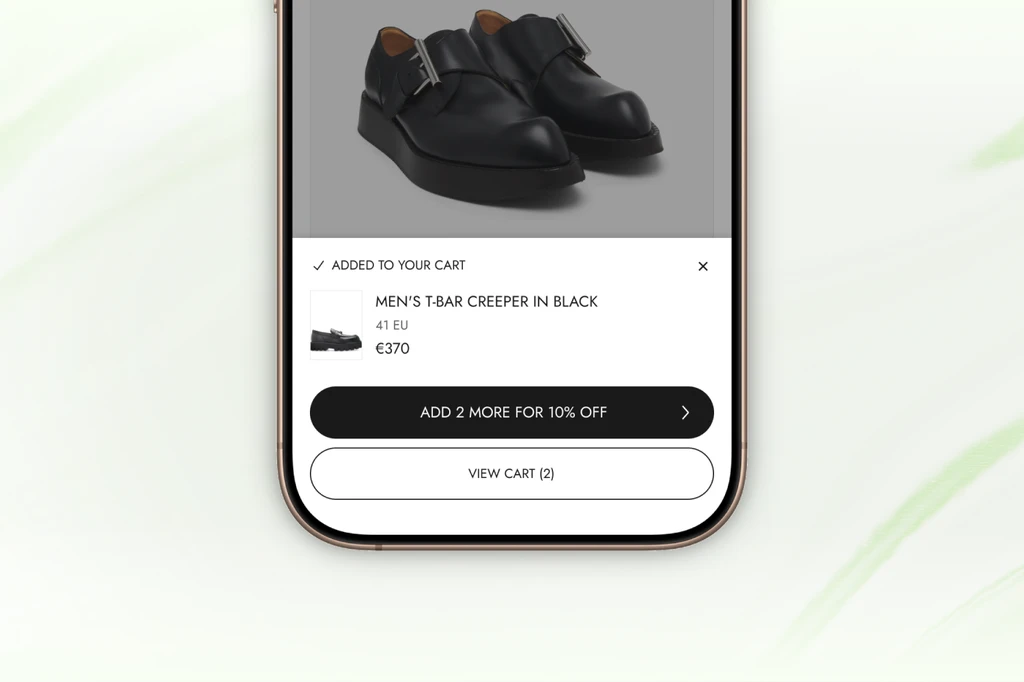
The moment a shopper adds to cart is the highest intent they'll ever have. Popup Upsell captures it and turns single-item orders into bigger baskets, without sending shoppers anywhere.
Read more -
 Product
 Cart Experiments: A/B test your Shopify cart drawer at scale
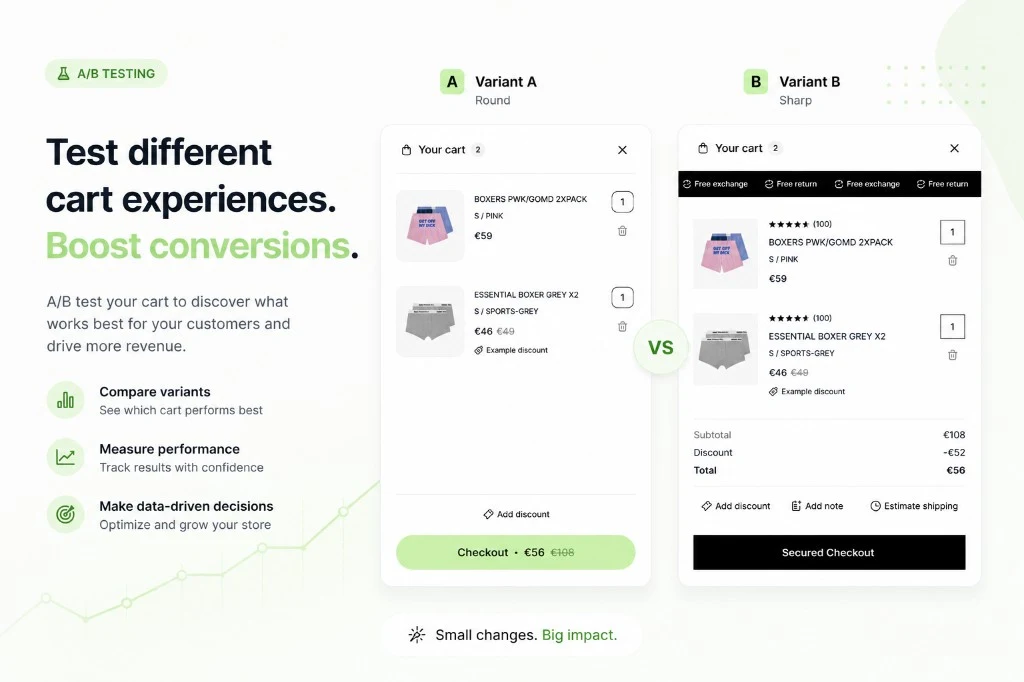
Run A/B tests on your Shopify cart drawer and see which version drives more orders and higher AOV. Pick a winner and roll it out in one click.
Read more